


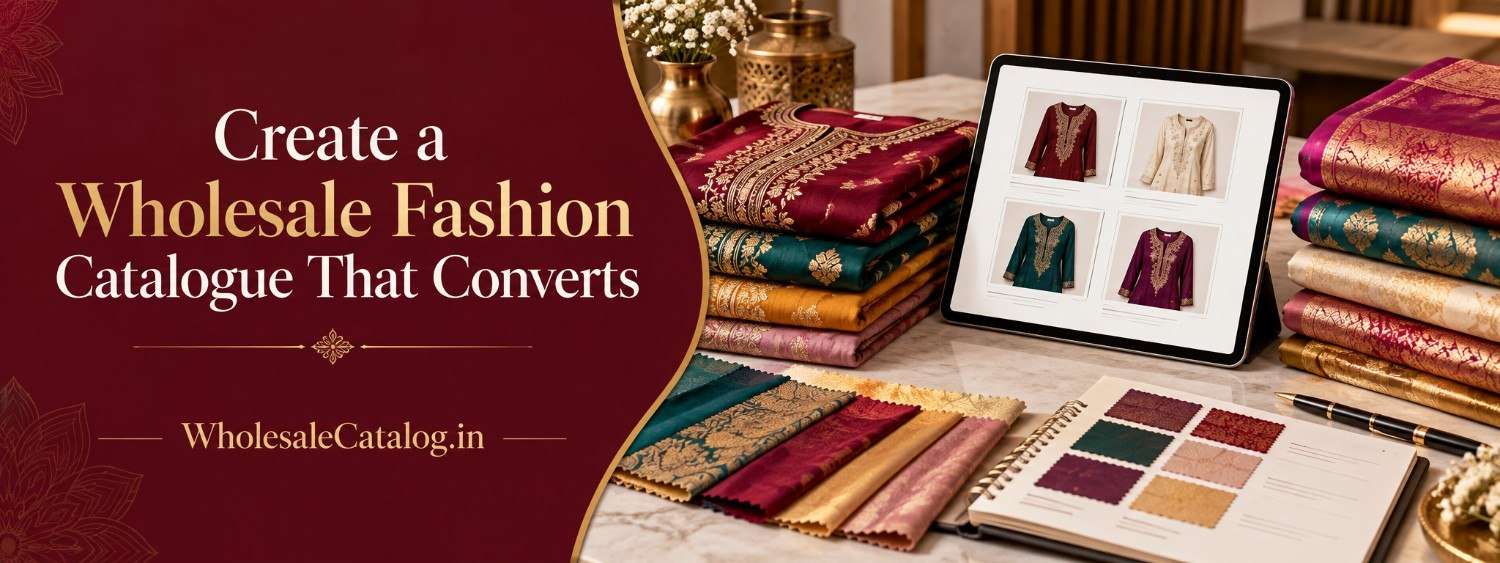
How to Create a Wholesale Fashion Catalogue That Converts Retailers
How to Create a Wholesale Fashion Catalogue That Converts Retailers
A wholesale fashion catalogue is more than a collection of product photos. For a retailer, boutique owner or reseller, it is often the first point of contact with your products. If the catalogue is confusing, incomplete or difficult to browse, even a strong collection may not receive enquiries. If it is clear, organised and trustworthy, it can help buyers make faster decisions.
A good catalogue should answer the buyer’s important questions before they ask: What is the product? What fabric is used? What is the price? What sizes are available? What is the minimum order quantity? How can they place an order?
This guide explains how to create a wholesale catalog that supports enquiries, saves time and helps retailers buy with confidence.
Start With a Clear Buyer in Mind
Your catalogue should be designed for the buyer you want to attract. A reseller needs simple product codes, price clarity and ready-to-share images. A boutique owner may need fabric, size and collection details. A larger retailer may want consistency, repeat availability and category-wise organisation.
Before preparing the catalogue, decide:
- Who will receive it?
- Are they retailers, resellers or boutique owners?
- Are they looking for daily wear, festive wear or premium products?
- Will they order through WhatsApp, a website or a sales representative?
- Do they need ready stock or pre-order options?
A catalogue built for every possible buyer can become crowded. A focused catalogue feels more professional and is easier to use.
Organise Wholesale Kurtis, Sarees and Dress Materials by Category
A well-organised wholesale clothing catalogue helps retailers, boutique owners and resellers discover products faster, compare prices and make confident bulk purchasing decisions. Instead of displaying products randomly, suppliers should create dedicated sections for Wholesale Kurtis, Wholesale Sarees and Wholesale Dress Materials, three important categories in the Indian ethnic wear market.
Wholesale Kurtis – Organise by Style, Fabric and Size
Wholesale kurtis should be categorised according to customer preferences, fabric quality and occasion. Popular collections include cotton kurtis, printed kurtis, rayon kurtis, designer kurtis, plus-size kurtis and kurti pant sets. Buyers can further filter products by size, wholesale price, design and seasonal demand.
Wholesale Sarees – Separate Collections by Occasion
A structured wholesale sarees catalogue makes sourcing easier for retailers. Create separate collections for cotton sarees, silk sarees, printed sarees, daily-wear sarees, festive sarees and designer sarees. Clear product photographs, fabric descriptions and price ranges help buyers select suitable stock for their target customers.
Wholesale Dress Materials – Categorise by Fabric and Design
Wholesale dress material should be organised into cotton dress materials, unstitched salwar suits, printed dress materials, embroidered dress materials and premium dress material collections. Mention fabric details, available designs, catalogue quantities and minimum order requirements.
Why Category-Based Catalogues Matter
At WholesaleCatalog.in, category-based product browsing helps B2B buyers explore wholesale kurtis, sarees and dress materials without sorting through unrelated products.
A clearly organised catalogue improves product discovery, simplifies bulk ordering and helps retailers build profitable ethnic wear collections.
Use Clean, Honest Product Photos
Product photos are the centre of every fashion catalogue. They should look appealing, but they must also show the product honestly.
For each design, try to include:
- Full front view
- Back view, if relevant
- Fabric close-up
- Border or pallu detail for sarees
- Neckline and sleeve detail for kurtis
- Bottom wear and dupatta view for sets
- Short video where possible
- Colour options, if available
Use consistent lighting and a clean background. Avoid excessive filters because they can create colour expectations that the actual product does not meet.
For wholesale buyers, a clear product image is more useful than an overly edited image. They need to know what they can confidently show to their own customers.
Give Every Product a Unique Code
A product code makes ordering faster and reduces confusion. Instead of writing long descriptions in every WhatsApp message, buyers can simply send the code.
A useful product code may include:
- Category abbreviation
- Collection number
- Design number
- Colour variation, if required
For example:
- KUR-102
- SAREE-245
- DM-067
- SET-118
Do not reuse product codes for different designs. If a product is discontinued, mark it as unavailable instead of assigning the code to another item.
Product codes also help with inventory tracking, billing and customer follow-up.
Add Product Details That Help Buyers Decide
A catalogue should not force buyers to ask basic questions repeatedly. Include practical information next to each product.
Important details can include:
- Product code
- Product name or collection name
- Wholesale price
- Fabric
- Available sizes
- Product length
- Bottom and dupatta details
- Number of pieces in a set
- MOQ
- Dispatch timeline
- Available colours
- Care instructions, when relevant
For sarees, mention whether a blouse piece is included. For kurti sets, clarify which pieces are included. For jewellery, mention whether the product is a single item or a complete set.
Accurate product information builds trust and prevents unnecessary returns or exchange requests.
Show Price Clearly
A wholesale catalog should make pricing easy to understand. Hidden pricing may create more enquiries, but it can also waste time for both the supplier and buyer.
You can display:
- Per-piece wholesale price
- Set price
- Minimum order value
- Discount conditions, if any
- Shipping or transport note
- GST note, when applicable
If your rates change frequently, add a clear message such as “Prices may change based on availability” rather than leaving buyers confused later.
Price transparency helps attract buyers who are genuinely ready to order.
Add a Simple Order Process
A retailer should understand the ordering process after viewing the catalogue. Add one short order section near the beginning or end.
For example:
- Select product codes.
- Send codes and quantity on WhatsApp.
- Confirm availability and final amount.
- Make payment as instructed.
- Receive dispatch details after order processing.
Keep the process simple. Avoid long paragraphs of policy text inside the product pages. Detailed policies can be placed on the final page or shared separately when required.
Make the Catalogue Easy to Share on WhatsApp
Many B2B fashion orders begin on WhatsApp. Your catalogue should therefore be mobile-friendly.
Useful practices include:
- Use readable text size.
- Avoid tiny product images.
- Keep file size reasonable.
- Separate very large catalogues into category-wise files.
- Add a contact number or website on the cover page.
- Use a clear cover title such as “New Kurti Collection” or “Festive Saree Catalogue.”
A catalogue that opens quickly and is easy to forward is more likely to be shared by resellers with their own customers.
Create Collection Covers That Attract Attention
A cover page gives buyers a reason to open the file. Use a clear headline, seasonal focus and your brand name.
Examples:
- New Daily-Wear Kurti Collection
- Festive Sarees for Retailers
- Premium Dress Materials Catalogue
- Co-ord Sets for Boutique Owners
- Ready-to-Dispatch Wholesale Collection
A cover should look polished but not overcrowded. Use one strong image, a readable title and the correct website or contact details.
Keep Stock Information Updated
Outdated catalogues can create customer frustration. If a buyer selects a product that is repeatedly unavailable, they may stop trusting the catalogue.
Update regularly:
- Sold-out designs
- New arrivals
- Revised prices
- Available size ranges
- Colour options
- Dispatch availability
You do not need to rebuild the entire catalogue every day. Maintain a master catalogue, then share short new-arrival catalogues and status updates for fresh stock.
Use a Strong Final Page
The final page should make the next step obvious. Include:
- Brand or website name
- Contact method
- Order instructions
- MOQ information
- Dispatch note
- Short trust-building message
For example: “Send product code and quantity for availability confirmation.”
This turns a catalogue from a passive document into a sales tool.
Common Catalogue Mistakes to Avoid
Avoid these mistakes:
- No product codes
- Missing prices
- Blurry or inconsistent images
- Too much text on one page
- No category grouping
- Unclear MOQ
- Incorrect size information
- Outdated availability
- No ordering instructions
- Overloaded cover page
A simpler catalogue with accurate information will usually perform better than a stylish catalogue that leaves buyers confused.
FAQs.
What should a wholesale fashion catalogue include?
Include product photos, codes, prices, fabric, sizes, MOQ, order details and dispatch information.
Should wholesale catalogues show prices?
Yes, clear pricing can save time and attract serious buyers. Mention if prices depend on availability or order quantity.
How many products should one catalogue have?
Keep it manageable. Large catalogues can be divided by category, season or price range for easier browsing.
Can I use the same catalogue for retailers and resellers?
Yes, but make sure it has product codes, clear pricing and enough details for buyers who need to sell onward.
How often should I update a catalogue?
Update whenever major stock, price, size or collection changes occur. New-arrival catalogues can be shared more frequently.
A clear catalogue makes wholesale buying easier for your customers and selling easier for your team. Build better collections with WholesaleCatalog.in and present every product with the details retailers need to order confidently.