

Jaipur Wholesale Kurti Market: Locations, Prices & Buying Guide 2026
Jaipur Wholesale Kurti Market: Locations, Prices & Buying Guide 2026
Jaipur is one of India's established destinations for traditional printed textiles and women's ethnic wear. For retailers, boutique owners and resellers, understanding the Jaipur wholesale kurti market means learning where garments are manufactured, how different printing styles are produced and which sourcing methods suit their business.
Unlike a single wholesale shopping complex, Jaipur has several textile areas serving different buyers. Sanganer is associated with block printing, Bapu Bazaar offers finished ethnic garments, and industrial areas such as Sitapura are relevant for garment manufacturing.
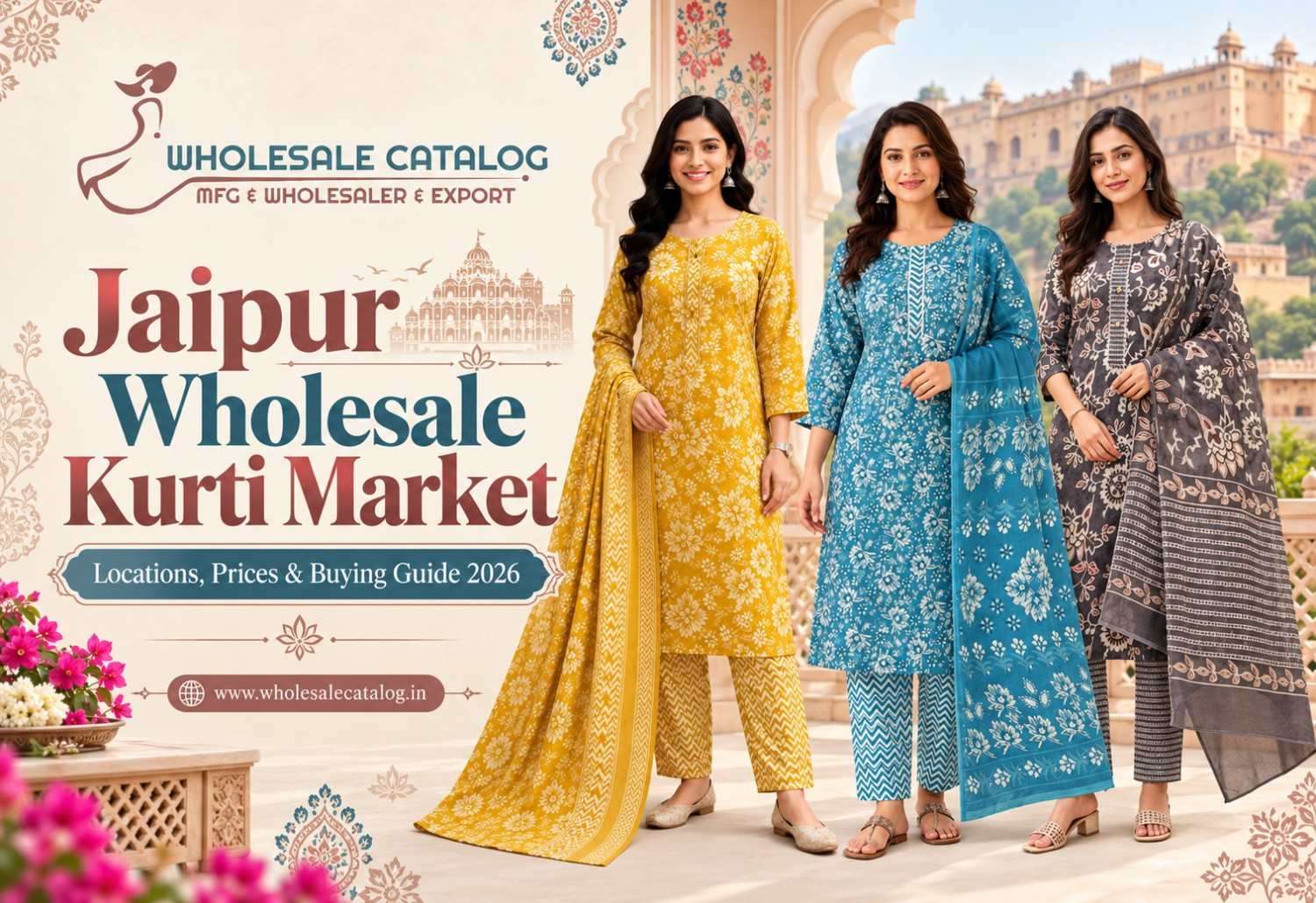
Buyers researching the jaipur wholesale kurti market can also compare Jaipuri cotton kurtis, printed kurta sets and coordinated outfits through online wholesale catalogues.
Why Is Jaipur Famous for Wholesale Kurtis?
Jaipur's textile identity comes from its long-standing printing traditions, particularly Sanganeri and Bagru hand block printing.
Sanganeri designs often feature delicate floral patterns, small motifs and detailed arrangements. Bagru printing is associated with earthy colours, geometric elements and traditional resist-printing techniques.
Both crafts have registered Geographical Indication recognition in India.
However, not every printed kurti sold as “Jaipuri” is handmade. Some products use machine printing or digitally reproduced patterns. Retailers should verify the printing method rather than assuming every Jaipuri-style garment is hand block printed.
Major Wholesale Kurti Markets in Jaipur
1. Sanganer – Traditional Textile and Printing Hub
Sanganer is an important area for buyers interested in cotton fabrics, Sanganeri prints and textile production.
Its printing workshops and textile suppliers make it relevant for boutiques seeking traditional printed collections.
Buyers can explore printed fabrics, finished kurtis and manufacturing connections. Before purchasing, confirm whether the supplier sells ready-made garments, fabric or both.
2. Bapu Bazaar – Finished Jaipuri Kurtis
Bapu Bazaar, located within Jaipur's historic city market area, is known for traditional clothing, printed textiles and Rajasthani merchandise.
It is useful for buyers who want to inspect finished kurtis, compare colours and examine fabric quality.
However, many shops also serve individual shoppers and tourists. Wholesale buyers should specifically request quantity-based rates and minimum order requirements.
3. Sitapura Industrial Area – Manufacturing Sourcing
Sitapura is a manufacturing and industrial area where garment businesses and textile-related enterprises operate.
It may be suitable for larger orders, production enquiries and discussions about repeat manufacturing.
Buyers should arrange supplier appointments rather than expecting every industrial unit to operate as a walk-in wholesale showroom.
4. Chandpole Bazaar – Mixed Textile Shopping
The Chandpole market area offers another option for exploring textile traders and mixed clothing merchandise.
Its relevance depends on the supplier's available products and wholesale arrangements.
For buyers unfamiliar with Jaipur, visiting several sellers and comparing equivalent garments is more useful than relying on a single quotation.
Types of Kurtis Available in Jaipur Wholesale Markets
Cotton Printed Kurtis
Cotton printed kurtis are suitable for everyday clothing collections. Their comfort, fabric weight and print characteristics deserve attention, especially when sourcing for warm-weather markets.
Sanganeri and Bagru Print Kurtis
These styles reflect Rajasthan's textile traditions. Buyers should distinguish authentic hand block printing from mass-produced garments featuring similar motifs.
Kurti Pant and Dupatta Sets
Three-piece outfits include a kurti, bottom and dupatta. They offer a coordinated clothing option, particularly for boutiques selling complete ethnic outfits.
Anarkali and Designer Kurtis
Anarkali designs feature a flared silhouette, while designer collections may include varied necklines, embroidery and decorative finishing.
Each product category should be evaluated separately because material consumption and production costs differ.
Jaipur Wholesale Kurti Prices: What Affects the Rate?
Wholesale kurti prices are not fixed across Jaipur. Two visually similar garments may have significantly different costs.
Important factors include fabric composition, printing technique, stitching quality, embroidery, garment length and order quantity.
Buyers should also distinguish between a single kurti and a complete three-piece outfit.
For reference, WholesaleCatalog.in currently lists the Sabella Jaipuri Cotton Vol 3 co-ord catalogue at ₹599 per set with a 20-piece MOQ. Its Felocity Cotton Vol 736 three-piece Anarkali catalogue is listed at ₹1,099 per set with a 12-piece MOQ.
These are specific online catalogue examples, not standard rates for every Jaipur wholesaler. Prices, availability and order conditions may change.
How to Check Kurti Quality Before Bulk Buying
Experienced buyers evaluate more than product photographs.
Fabric composition: Confirm whether the garment uses pure cotton, cotton blends, rayon or another material.
Print quality: Examine pattern clarity, colour variation and alignment around garment seams.
Measurements: Compare actual bust, shoulder, hip and length measurements against the supplier's size chart.
Stitching: Inspect seams, necklines, sleeve attachments and finishing.
Washing behaviour: Ask about expected shrinkage and colourfastness. Where practical, test a sample before a larger purchase.
For repeat orders, maintain records of design codes, fabric specifications and customer feedback.
Understanding MOQ and Catalogue Purchasing
Minimum Order Quantity, or MOQ, determines how many pieces a supplier requires buyers to purchase.
Some sellers allow a combination of sizes and colours, while others require complete catalogues.
For example, a catalogue containing three designs in four sizes creates a twelve-piece purchase.
Before confirming an order, ask whether the catalogue requires all designs, whether sizes can be exchanged and whether successful designs can be reordered.
Also confirm GST invoicing, shipping charges, dispatch expectations and the process for reporting manufacturing defects.
Buying Jaipur Kurtis Online vs Visiting the Market
Physical market visits allow retailers to touch fabrics, compare stitching and communicate directly with suppliers.
Online sourcing offers the convenience of reviewing product catalogues without repeated travel.
For retailers outside Rajasthan, WholesaleCatalog.in provides an online collection featuring Jaipuri-style printed kurtis and coordinated sets.
Neither method is automatically better. Physical inspection is valuable when evaluating a new supplier, while established online catalogue relationships can simplify repeat sourcing.
Building a Practical Jaipuri Kurti Collection
Instead of buying every available design, retailers should begin with their customer's requirements.
A daily-wear store may prefer simple cotton prints and manageable price points. A boutique serving occasion-wear customers may require coordinated sets and more detailed garments.
A balanced assortment can include traditional floral designs, geometric prints, straight-cut kurtis and selected kurta sets.
Track which sizes, patterns and colours sell consistently before increasing order quantities.
Frequently Asked Questions.
Where is the main wholesale kurti market in Jaipur?
Jaipur does not have only one wholesale kurti market. Sanganer, Bapu Bazaar, Sitapura and other textile areas serve different sourcing requirements.
Which Jaipur market is suitable for cotton printed kurtis?
Sanganer is particularly relevant for traditional printed textiles, while Bapu Bazaar offers opportunities to compare finished ethnic garments.
What is the wholesale price of kurtis in Jaipur?
Prices vary according to fabric, design, craftsmanship and order quantity. Always compare like-for-like products and confirm current supplier quotations.
Can retailers buy Jaipuri kurtis online?
Yes. Online wholesale catalogues allow retailers to review available designs, sizes, prices and minimum order quantities before purchasing.
What should buyers check before placing bulk orders?
Check fabric specifications, garment measurements, print quality, MOQ, GST billing, dispatch terms and defect-resolution procedures.
Explore Jaipuri Kurti Collections
Understanding Jaipur's textile markets makes wholesale sourcing more informed and systematic.
Retailers and boutique owners can review the available Jaipuri kurtis and coordinated ethnic-wear catalogues at WholesaleCatalog.in before planning their next purchase.
Wholesale Enquiries: +91 99137 86037