

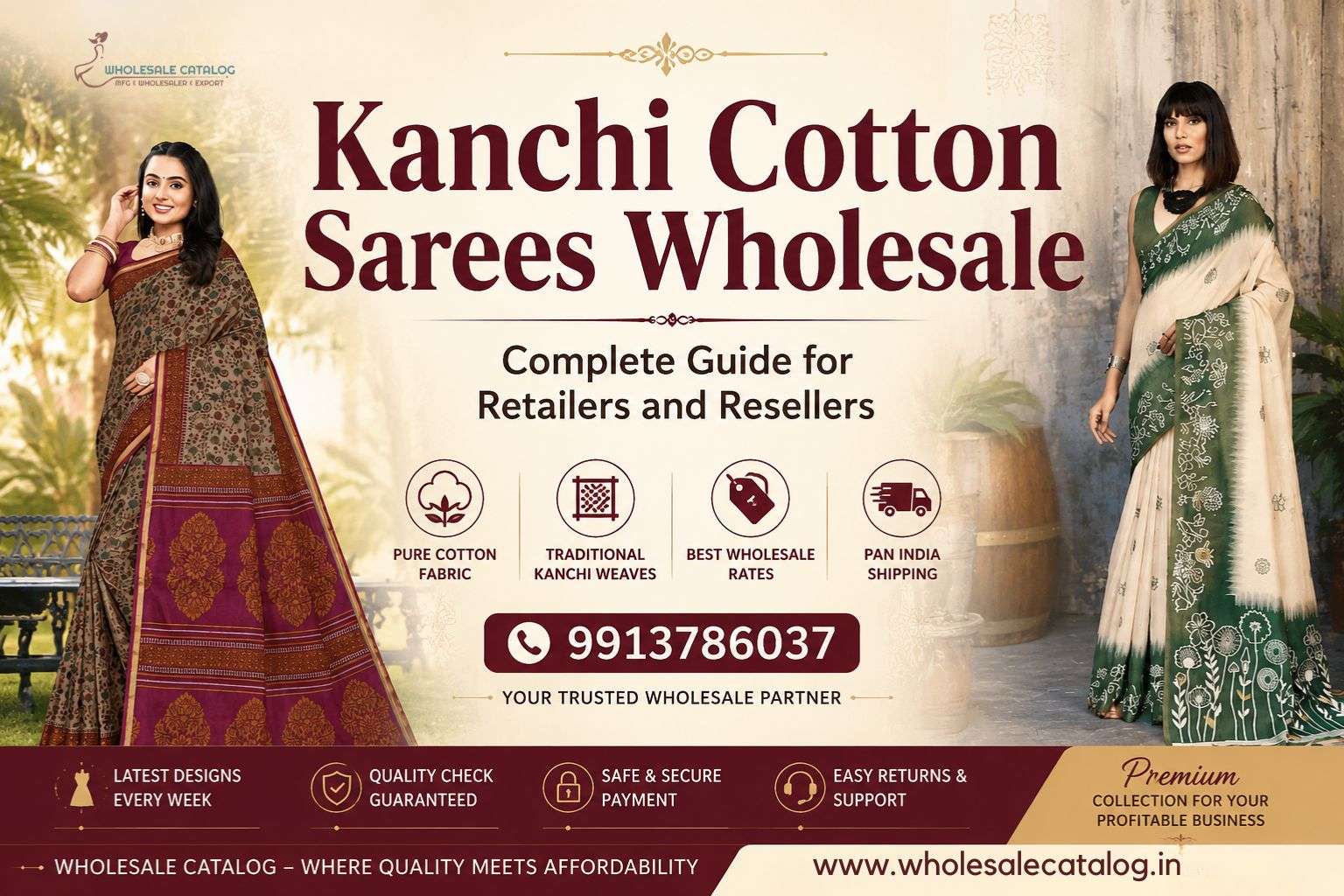
Kanchi Cotton Sarees Wholesale – Complete Guide for Retailers and Resellers
The Indian ethnic fashion industry continues to grow rapidly, and among the most demanded products in this segment, kanchi cotton sarees wholesale collections have become a major attraction for retailers, boutique owners, online resellers, and fashion entrepreneurs. Cotton sarees have always represented comfort, elegance, and timeless beauty, but Kanchi cotton sarees take this appeal to another level with their rich weaving traditions and premium-quality craftsmanship. Today, customers are not just looking for fashionable sarees; they also want breathable fabrics, durable materials, and elegant ethnic styles suitable for festivals, office wear, and daily use. That is exactly why the demand for kanchi cotton sarees wholesale products has surged across India and international markets.
Retailers searching for profitable ethnic wear categories often prefer cotton sarees because they sell consistently throughout the year. Unlike seasonal fashion trends that disappear quickly, cotton sarees remain evergreen. Women of all age groups prefer them due to their versatility and comfort. From college students to working professionals and homemakers, everyone appreciates the grace of a cotton saree. This rising demand has pushed many sellers toward trusted wholesale suppliers that can provide quality products at competitive pricing. Businesses like Wholesalecatalog have become popular among fashion resellers because they offer extensive collections suitable for different customer preferences.
Another reason why retailers are investing in kanchi cotton sarees wholesale collections is the growing online market. Social media stores, WhatsApp sellers, Instagram boutiques, and ecommerce platforms have transformed the saree business landscape. A single trending saree design can generate hundreds of orders within days. That is why choosing the right supplier, pricing strategy, and product category becomes critical for success. Whether you are running a physical shop or an online ethnic wear business, understanding the wholesale market can help you maximize profits and build long-term customer trust.
Why Kanchi Cotton Sarees Are in High Demand
The popularity of cotton sarees in India has always remained strong, but Kanchi cotton sarees have developed a special place in the ethnic fashion industry. Their elegant borders, artistic weaving patterns, and breathable fabric make them ideal for everyday wear as well as festive occasions. Modern customers now seek clothing that combines tradition with comfort, and these sarees perfectly satisfy both needs. That is one of the major reasons why the wholesale kanchi cotton sarees segment has witnessed massive growth in recent years.
Indian consumers are also becoming more conscious about fabric quality. Synthetic fabrics may look attractive initially, but they often fail to provide comfort during long hours of wear. Cotton sarees, on the other hand, feel light, soft, and skin-friendly. Women living in warm regions especially prefer cotton sarees because they allow proper airflow and remain comfortable throughout the day. Retailers understand this demand very well, which is why they continuously invest in wholesale kanchi cotton sarees collections to maintain regular sales throughout the year.
Fashion trends have also contributed significantly to the growth of cotton sarees. Celebrities, influencers, and fashion bloggers frequently showcase cotton saree styling ideas on social media platforms. This exposure has increased the popularity of traditional attire among younger buyers. Sarees are no longer limited to weddings or religious events; they are now styled creatively for office meetings, casual outings, and even modern photoshoots. Retailers who understand these changing trends often perform exceptionally well in the ethnic fashion market because they can attract both traditional and modern customers simultaneously.
Understanding the Wholesale Kanchi Cotton Sarees Market
The Indian saree industry is one of the largest textile markets globally, and the cotton saree wholesale market plays a huge role in this growth. Kanchi cotton sarees are known for their premium weaving styles inspired by South Indian textile traditions. These sarees often feature elegant zari borders, temple motifs, floral designs, and artistic patterns that appeal to customers looking for graceful ethnic fashion. Retailers prefer them because they can target multiple customer groups ranging from budget-conscious shoppers to premium ethnic wear buyers.
One important factor driving the success of the cotton saree wholesale market is variety. Customers today expect endless design options, color combinations, and fabric textures. Wholesale suppliers that continuously update their collections gain a competitive advantage because retailers always want fresh inventory. Fashion businesses that fail to introduce new designs often lose customers quickly in today’s fast-moving market. This is why reliable suppliers with updated catalogs are essential for long-term growth.
Surat has emerged as one of India’s biggest textile hubs, supplying sarees across domestic and international markets. Manufacturers and wholesalers here produce thousands of saree designs every month, making it easier for retailers to access trending collections at affordable rates. Many resellers prefer Surat-based suppliers because they provide a balance between quality and pricing. Retailers can purchase bulk sarees at competitive rates and still maintain healthy profit margins after resale. This business model has made Surat an important destination for ethnic fashion sourcing.
If you want to expand your saree business with high-demand ethnic products, you can explore this premium collection of kanchi cotton sarees wholesale styles designed for retailers, boutique owners, and online resellers looking for profitable fashion opportunities.
Fancy Cotton Sarees Wholesale for Modern Buyers
Fashion keeps evolving, and today’s saree buyers are looking for stylish designs that blend traditional beauty with modern aesthetics. That is where the fancy cotton sarees wholesale category becomes highly profitable. Fancy cotton sarees often include digital prints, designer borders, trendy color combinations, tassel work, embroidery patterns, and lightweight textures that attract younger audiences. These sarees are especially popular during festive seasons, office events, college functions, and family gatherings.
Retailers benefit greatly from the fancy cotton sarees wholesale segment because it offers excellent repeat business opportunities. Customers who purchase stylish sarees for one event often return for more designs later. Unlike expensive bridal collections that sell occasionally, fashionable cotton sarees generate regular sales throughout the year. Boutique owners and Instagram sellers particularly love this category because it photographs beautifully and performs exceptionally well in online marketing campaigns.
Festivals like Diwali, Navratri, Durga Puja, Pongal, and wedding seasons significantly boost demand for fashionable ethnic wear. During these periods, customers actively search for elegant yet affordable sarees suitable for celebrations. Retailers who stock trendy cotton sarees before festive seasons usually experience substantial increases in sales. This seasonal demand pattern creates excellent opportunities for wholesalers and resellers to maximize profits within short periods.
Modern buyers also appreciate versatility. Many women now style cotton sarees with belts, jackets, designer blouses, oxidized jewelry, and sneakers to create fusion fashion looks. This creative styling trend has increased the popularity of cotton sarees among younger generations who previously preferred western wear. Retailers who understand these fashion preferences can market their sarees more effectively and attract trend-conscious customers.
Pure Cotton Sarees Wholesale Buying Guide
When customers purchase sarees, fabric quality becomes one of the most important deciding factors. That is why the pure cotton sarees wholesale category continues to dominate the ethnic fashion industry. Pure cotton sarees provide superior comfort, durability, and elegance compared to synthetic alternatives. Customers who experience the softness and breathability of authentic cotton often become loyal repeat buyers because they appreciate the long-lasting comfort these sarees provide.
Retailers must understand how to identify genuine cotton fabrics before purchasing inventory in bulk. High-quality cotton sarees usually feel soft, absorb moisture effectively, and remain comfortable even during hot weather. Pure cotton fabric also develops a graceful texture after washing instead of losing quality. Customers who prioritize comfort, especially working women and homemakers, frequently prefer authentic cotton sarees over cheaper synthetic options.
One common mistake many new retailers make is focusing only on low pricing instead of quality. Cheap fabrics may increase profit margins initially, but poor customer satisfaction can damage business reputation quickly. In today’s competitive market, customer reviews and recommendations play a major role in business success. Retailers who consistently provide quality products build stronger trust and receive more repeat orders.
Experienced wholesalers often recommend balancing affordability with quality. Retailers should compare fabric finishing, weaving consistency, print quality, and border craftsmanship before finalizing bulk purchases. Investing in premium-quality sarees may require slightly higher initial costs, but it usually generates better customer satisfaction and higher long-term profits.
Cotton Sarees Wholesale Rate Explained
Pricing is one of the most critical factors in the saree business, and understanding the cotton sarees wholesale rate structure can help retailers make smarter purchasing decisions. Wholesale pricing depends on several factors including fabric quality, weaving complexity, embroidery work, print technology, order quantity, and packaging standards. Sarees with handcrafted detailing or premium zari work naturally cost more compared to simple printed cotton sarees.
The cotton sarees wholesale rate also changes depending on market demand and seasonal trends. During wedding seasons and major festivals, saree prices often increase because of higher consumer demand. Retailers who purchase inventory before peak seasons usually secure better pricing and improve profit margins. Smart business owners often plan their inventory strategy months in advance to avoid sudden market price fluctuations.
Here is a simple comparison table showing common pricing categories in the wholesale cotton saree industry:
| Saree Type | Approx Wholesale Rate | Ideal Customers |
|---|---|---|
| Basic Printed Cotton Sarees | ₹250 – ₹500 | Daily Wear Buyers |
| Fancy Cotton Sarees | ₹500 – ₹1200 | Fashion-Oriented Customers |
| Premium Kanchi Cotton Sarees | ₹1200 – ₹3000 | Boutique & Festive Buyers |
| Designer Cotton Sarees | ₹3000+ | Luxury Ethnic Wear Segment |
Profit margins in the saree business can vary between 20% to 60% depending on branding, marketing, and customer targeting. Online sellers often earn higher margins because they can reach wider audiences through social media and ecommerce platforms. Boutique owners may also increase profits by offering blouse stitching, styling consultations, and customized packaging services.
Why Wholesalecatalog Is Trusted by Retailers
Finding a reliable supplier is one of the biggest challenges in the ethnic fashion business. Retailers need suppliers who can provide quality products, updated collections, competitive pricing, and timely delivery. This is why many resellers trust Wholesalecatalog for sourcing ethnic fashion products. The platform offers extensive saree collections suitable for boutique owners, online resellers, wholesalers, and retailers across India.
One major advantage of sourcing from trusted suppliers is consistency. Customers expect the same fabric quality and design standards every time they order. Businesses that fail to maintain consistency often struggle with customer retention. Reliable suppliers help retailers build stronger brand credibility because customers receive quality products repeatedly. This becomes especially important in the online fashion market where customer reviews directly influence future sales.
Another important factor is variety. Retailers today cannot depend on a single product category. Fashion businesses grow faster when they diversify into multiple segments including sarees, kurtis, men’s wear, and kids fashion. Expanding product categories allows businesses to increase average order values and attract broader customer groups. That is why many retailers also explore stylish ethnic collections like men’s wear wholesale collections to complement their saree business and maximize sales opportunities.
Strong supplier relationships also improve business scalability. As order volumes grow, retailers need dependable inventory support and smooth logistics management. Suppliers who understand market trends and continuously introduce fresh collections help retailers stay competitive in the fashion industry.
Smart Cross-Linking Opportunities for Fashion Businesses
Successful fashion businesses rarely depend on a single product category. Customers who purchase sarees often shop for matching family fashion collections as well. This creates excellent cross-selling opportunities for retailers. For example, women purchasing sarees for festive occasions may also look for ethnic wear for their husbands and children. Retailers who offer complete family fashion solutions usually achieve better customer retention and higher sales volumes.
Expanding into kids fashion can significantly improve business growth because parents frequently purchase matching outfits for festivals, weddings, and celebrations. Stylish ethnic collections for children remain in high demand throughout the year, especially during festive seasons. Retailers looking to diversify their inventory can explore trendy kids wear wholesale collections to create more shopping opportunities for customers.
Businesses that focus only on product selling often miss larger branding opportunities. Modern customers appreciate brands that provide style inspiration, fashion advice, and shopping convenience. Creating blogs, styling guides, and category-based content helps establish authority in the fashion industry while improving organic search visibility.
Conclusion
The Indian ethnic fashion market continues to expand rapidly, and cotton sarees remain one of the most profitable product categories for retailers and resellers. The growing popularity of kanchi cotton sarees wholesale collections reflects changing consumer preferences toward comfortable, elegant, and versatile ethnic wear. From traditional buyers to modern fashion enthusiasts, cotton sarees appeal to a wide customer base that values both style and comfort.
The future of the saree industry looks promising because ethnic fashion continues evolving with modern styling trends. Customers today appreciate brands that provide quality products, meaningful shopping experiences, and trustworthy service. Retailers who adapt to these expectations while maintaining traditional craftsmanship can create strong, sustainable businesses in the growing ethnic wear market.
FAQs
1. Why are Kanchi cotton sarees popular among retailers?
Kanchi cotton sarees are popular because they combine traditional elegance with modern comfort. They attract customers across different age groups and provide excellent resale opportunities for retailers.
2. What is the average cotton sarees wholesale rate?
Wholesale rates usually start around ₹250 for basic cotton sarees and can exceed ₹3000 for premium designer collections depending on fabric quality and craftsmanship.
3. How can I identify pure cotton sarees?
Pure cotton sarees generally feel soft, breathable, and absorb moisture effectively. They also maintain their quality after multiple washes compared to synthetic fabrics.
4. Why is Surat famous for saree wholesaling?
Surat is known for its large textile manufacturing industry, wide product variety, competitive pricing, and strong supply chain network for ethnic fashion products.
5. How does internal linking help SEO for fashion websites?
Internal linking improves website navigation, increases user engagement, distributes SEO authority, and helps search engines understand website structure more effectively.